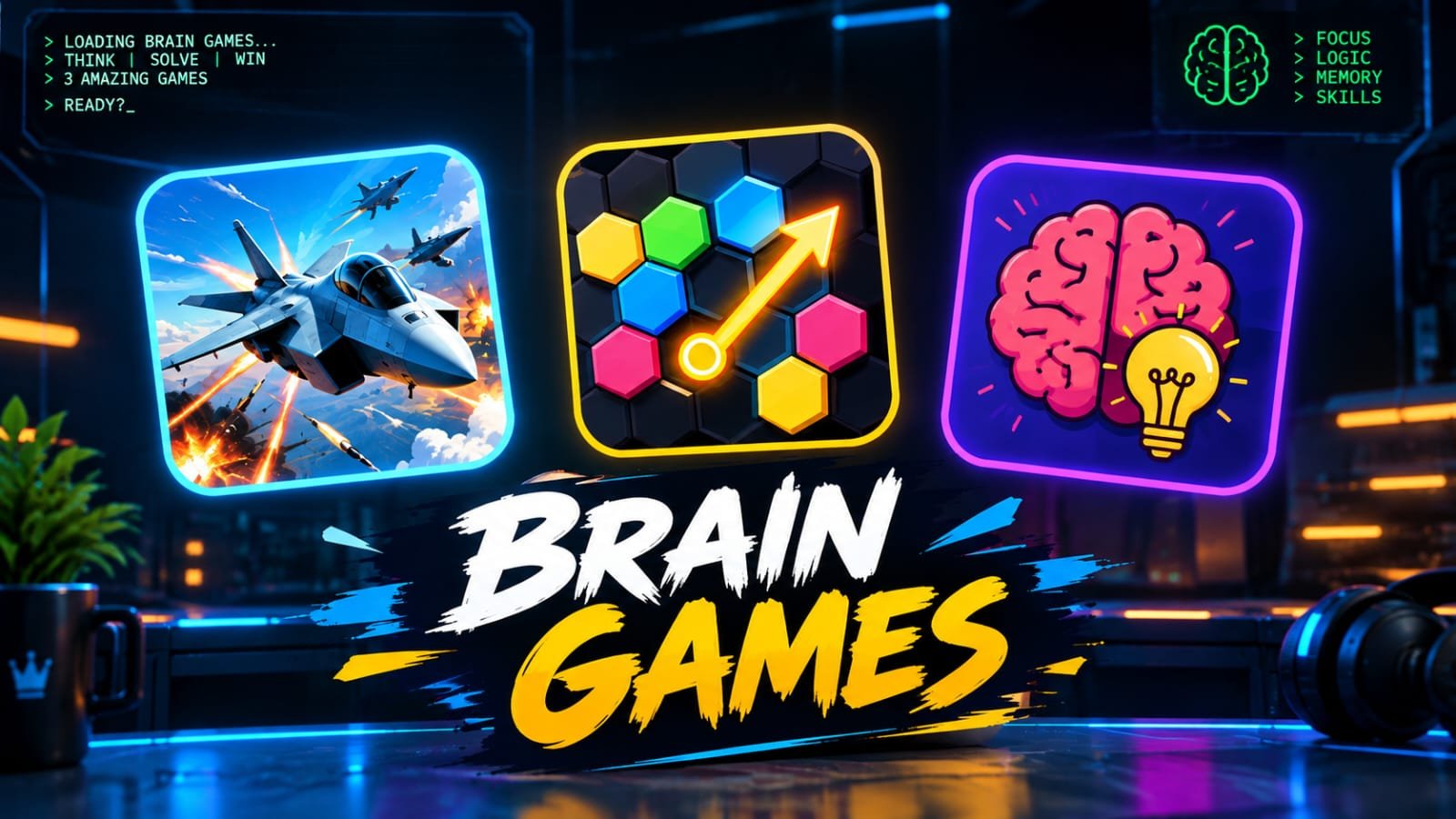
Brain Games: Benefits, Best Types, and Tips to Keep Your Mind Active
Brain games are a fun way to challenge your mind, improve concentration, and practice problem-solving skills. From number puzzles and memory challenges to strategy games and logic riddles, these activities can turn your free time into an opportunity for mental exercise. Whether you enjoy playing games on your smartphone or solving puzzles on paper, brain games offer an engaging way to keep your mind active.
With so many brain-training apps and online puzzles available, finding the right activities has become easier than ever. However, understanding their benefits and limitations can help you choose games that fit your goals and daily routine.
What Are Brain Games?
Brain games are activities designed to challenge mental abilities such as memory, attention, reasoning, pattern recognition, and logical thinking. They may be available as mobile apps, computer games, board games, or traditional puzzles.
Some brain games focus on remembering information, while others require players to solve problems under time limits or identify patterns. For example, Sudoku challenges logical reasoning, chess encourages strategic planning, and matching games test visual memory.
These activities can be enjoyed by children, students, working professionals, and older adults. The best choice depends on your interests, experience, and the mental skills you want to practice.
Benefits of Playing Brain Games
Regularly engaging in mentally challenging activities can support learning and help you practice important cognitive skills. The results vary depending on the activity and the individual.
1. Practice Memory Skills
Memory games encourage players to remember pictures, numbers, locations, or sequences. For example, a matching-card game requires you to recall where specific cards appeared.
Students can use these activities to practice remembering information, while adults may enjoy them as a simple daily mental challenge.
2. Improve Focus and Attention
Many brain-training games require concentration to identify differences, follow patterns, or complete puzzles. Playing without distractions can help you practice sustaining attention during a task.
For example, finding a hidden object in a detailed image requires careful observation and attention to small details.
3. Develop Problem-Solving Abilities
Logic puzzles and strategy games encourage players to evaluate different possibilities before choosing a solution. Games such as chess, Sudoku, and number riddles require planning, reasoning, and learning from mistakes.
These skills are useful in everyday situations, including organizing tasks, comparing options, and working through unfamiliar problems.
4. Provide Enjoyable Mental Stimulation
Brain games can make mental challenges entertaining rather than repetitive. Completing a difficult puzzle or reaching a new level may provide a sense of achievement.
They can also offer a relaxing break from routine activities when played in moderation.
Important: Brain games should not be viewed as a guaranteed way to increase intelligence, prevent dementia, or treat memory problems. Evidence for improvements in specific game-related skills is stronger than evidence that these benefits transfer to every aspect of everyday life.
Best Types of Brain Games to Try
Different games challenge different mental skills. Consider these popular options when building a balanced routine.
Sudoku and Number Puzzles
Sudoku involves filling a grid according to specific numerical rules. It encourages logical reasoning, pattern recognition, and careful planning. Beginners can start with easy puzzles and gradually try more difficult levels.
Memory Matching Games
These games ask players to find matching pairs of cards or images. They are simple to learn and suitable for short sessions during breaks.
Chess and Strategy Games
Chess encourages players to anticipate possible moves, assess risks, and develop strategies. Other turn-based strategy games can provide similar opportunities to practice planning and decision-making.
Word Games and Crossword Puzzles
Crosswords, word searches, and vocabulary games challenge language skills, word recognition, and recall. They can be especially enjoyable for people who prefer language-based activities over numbers.
Logic Riddles and Pattern Games
Logic riddles require players to analyze clues and draw conclusions. Pattern-recognition games ask you to identify relationships between shapes, symbols, or numbers. Both can provide challenging exercises for analytical thinking.
How to Choose the Right Brain Training App
When searching for the best brain games online, look for an app that offers useful challenges without unnecessary complexity.
Consider these factors:
- Variety of games: Choose apps that include memory, logic, attention, and problem-solving activities.
- Difficulty levels: Games should become more challenging as your skills improve.
- Privacy and security: Review the app’s permissions and privacy policy before sharing personal information.
- Pricing transparency: Check whether subscriptions, advertisements, or in-app purchases are required.
- Usability: Select an app with clear instructions, readable text, and an interface that suits your needs.
You do not need an expensive subscription to enjoy mental exercises. Free puzzles, physical board games, reading, and everyday learning activities can also provide valuable mental stimulation.
Tips for Getting More From Brain Games
For a practical routine, start with 10 to 15 minutes of brain games per day and choose activities you genuinely enjoy. Alternate between memory puzzles, logic challenges, and word games instead of repeating only one type.
Track your progress by noting which puzzles become easier over time. If a game feels too simple, increase the difficulty or try a different activity.
It is also important to maintain a balanced lifestyle. Regular physical activity, adequate sleep, social interaction, and continued learning support overall well-being. Brain games work best as one part of a broader routine rather than a replacement for these habits.
Conclusion
Brain games offer an enjoyable way to practice memory, concentration, logical reasoning, and problem-solving skills. Whether you prefer Sudoku, chess, word puzzles, or mobile brain-training apps, there are plenty of options for every age and skill level.
Download
Download
Start with simple challenges, explore different game types, and build a consistent routine that fits your schedule. Most importantly, enjoy the process. The goal is not just to achieve a high score but to stay curious, challenge yourself, and make mental exercise a rewarding part of everyday life.